
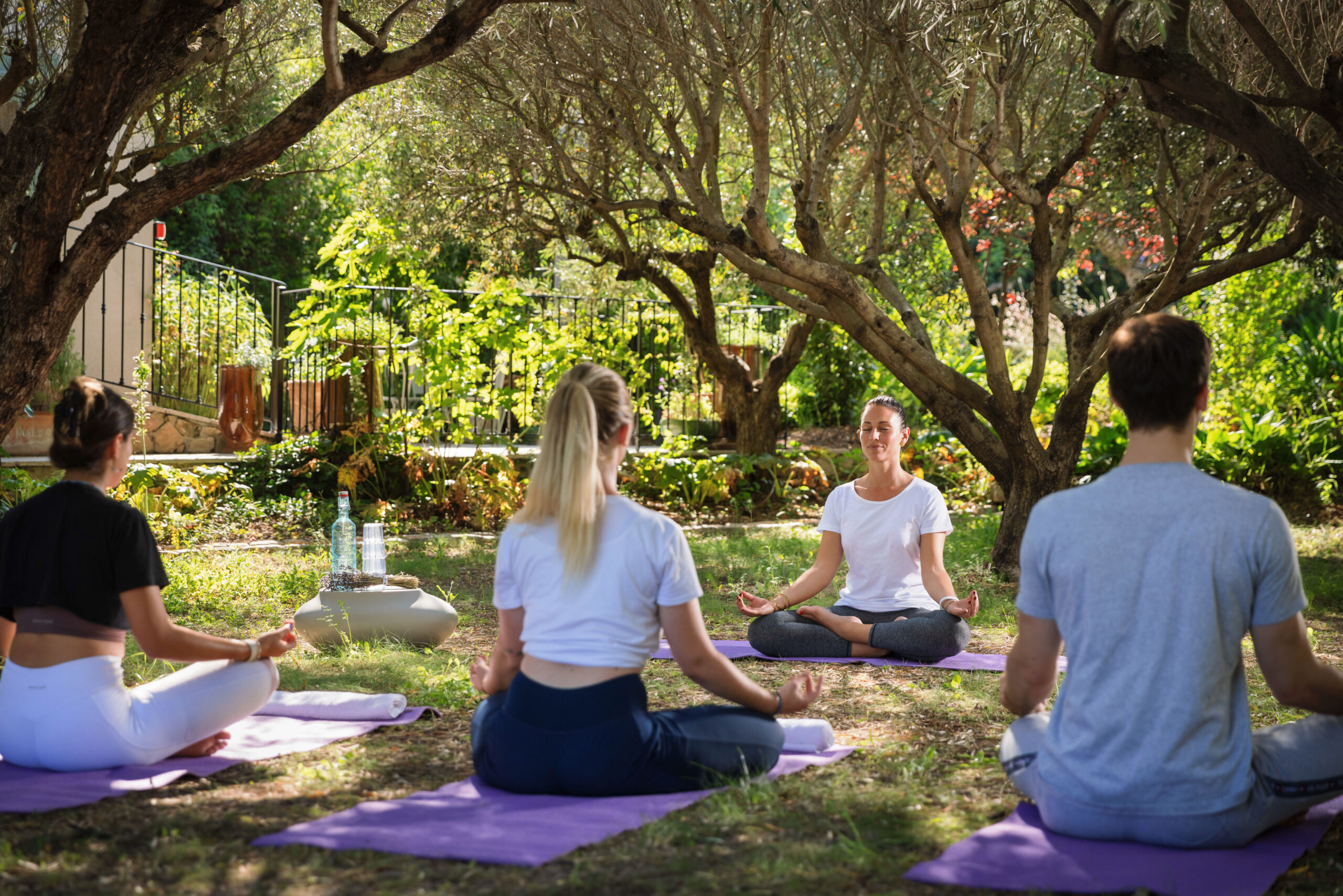
There is a quiet change underway in how Britons take their holidays, and you can watch it happening at Lou Calen, a four hectare estate woven through the Provençal village of Cotignac. The hotel is welcoming a different sort of UK guest these days. Not the traveller hunting for the perfect photograph or racing through a checklist of sights, but one who arrives with a simpler and more serious intention. They want to disappear for a while. They want to remember what their own company feels like.
The numbers explain why. Ofcom’s latest Online Nation report found that UK adults now spend a record four and a half hours online every single day, which works out at more than two full months of every year spent looking at a screen. And we know it is wearing us down. Research from EY found that 38 percent of UK consumers are concerned about their screen time and actively interested in a digital detox, while among 18 to 34 year olds, almost half believe their online lives are doing their wellbeing more harm than good.
So when the holiday finally arrives, it carries far more weight than it used to. ABTA’s Holiday Habits 2025-26 report found that 80 percent of British adults say holidays are important for their mental health, a figure that climbs to 90 percent among 25 to 34 year olds, and 65 percent now describe their holiday as the most important time of their entire year. British Airways’ 2026 travel trends research points in the same direction, with 54 percent of UK adults saying holidays are essential for managing stress, and nearly one in five admitting they ignore the clock completely once they are away, eating and sleeping whenever it suits them.
The industry has started giving this shift names. Hilton’s 2026 trends report calls it hush-pitality, noting that 23 percent of travellers now actively seek out quiet moments even when holidaying with the people they love most. Others have settled on JOMO travel, the joy of missing out. And in Britain the demand is already measurable. Unplugged, the company that rents out off-grid cabins where guests lock their phones in a box on arrival, ran at 83 percent occupancy across more than 50 cabins in 2025. Whatever we choose to call it, the direction is the same. A growing number of British travellers are no longer asking what a destination can show them. They are asking what it can spare them.
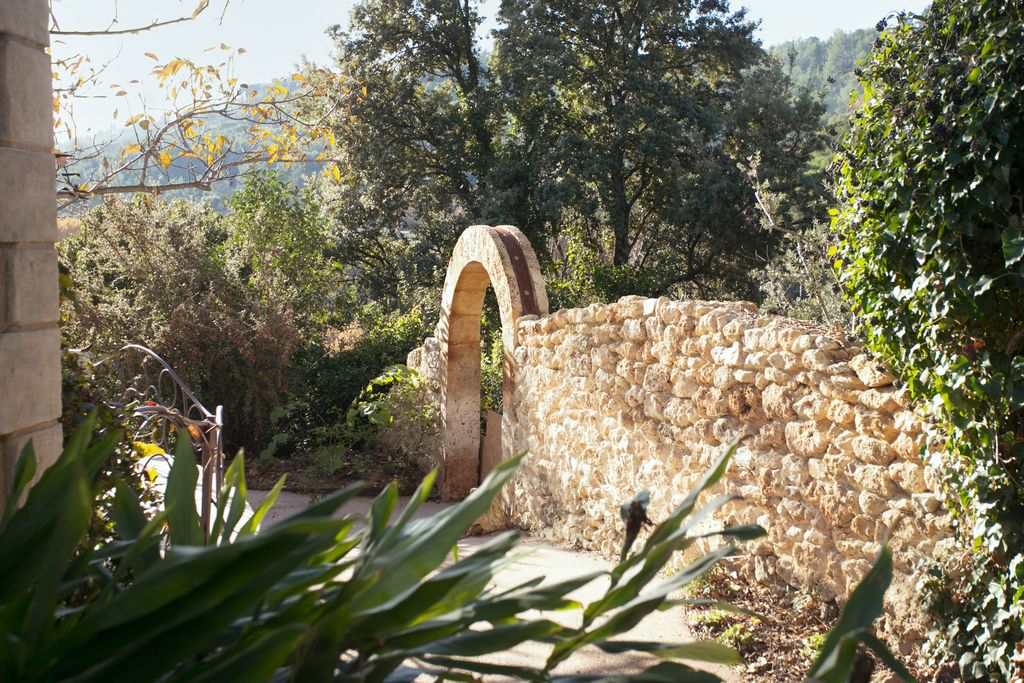
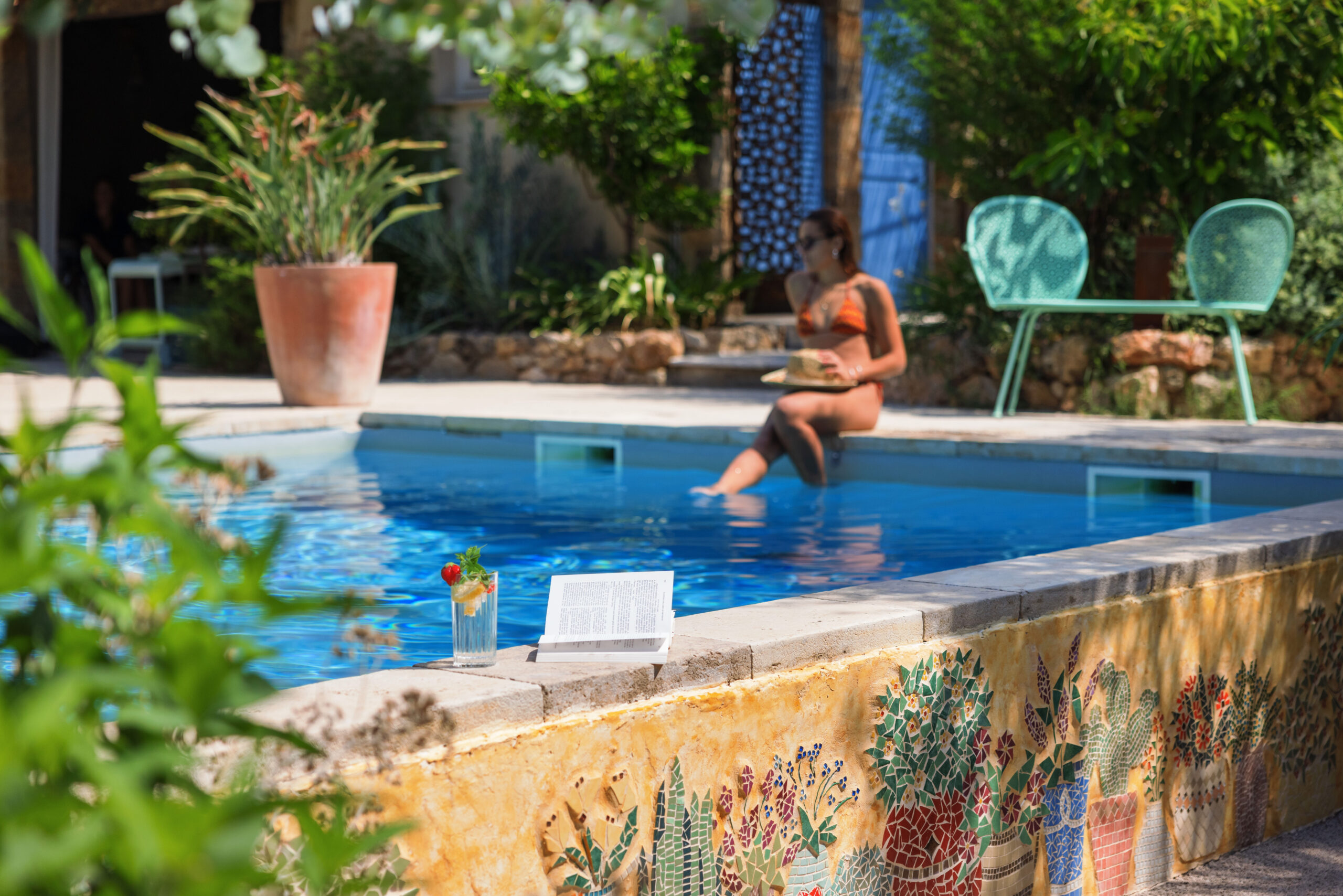
This is precisely where Lou Calen has found its moment. The estate does not market itself as a digital detox, and that is rather the point. It was simply built this way. There are no televisions in the rooms, not as a rule or a gimmick but as a given. The gardens have been left deliberately wild, following the contours of the land rather than any designer’s idea of symmetry, with olive trees, lavender and shaded paths that ask nothing of you. There is no gated entrance and no grand lobby. Reception sits beside the village bookshop, where locals wander in with their dogs, and the hotel’s buildings are scattered through the estate, part of a village officially recognised as one of Les Plus Beaux Villages de France. Guests shop at the same markets as residents, drink on the same terraces and pass the same faces on their morning walks. No two rooms are alike. Some are cottages tucked into the gardens, one is carved into the rock face, and another has stood for more than two hundred years.
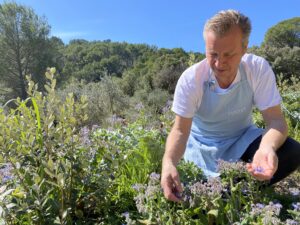
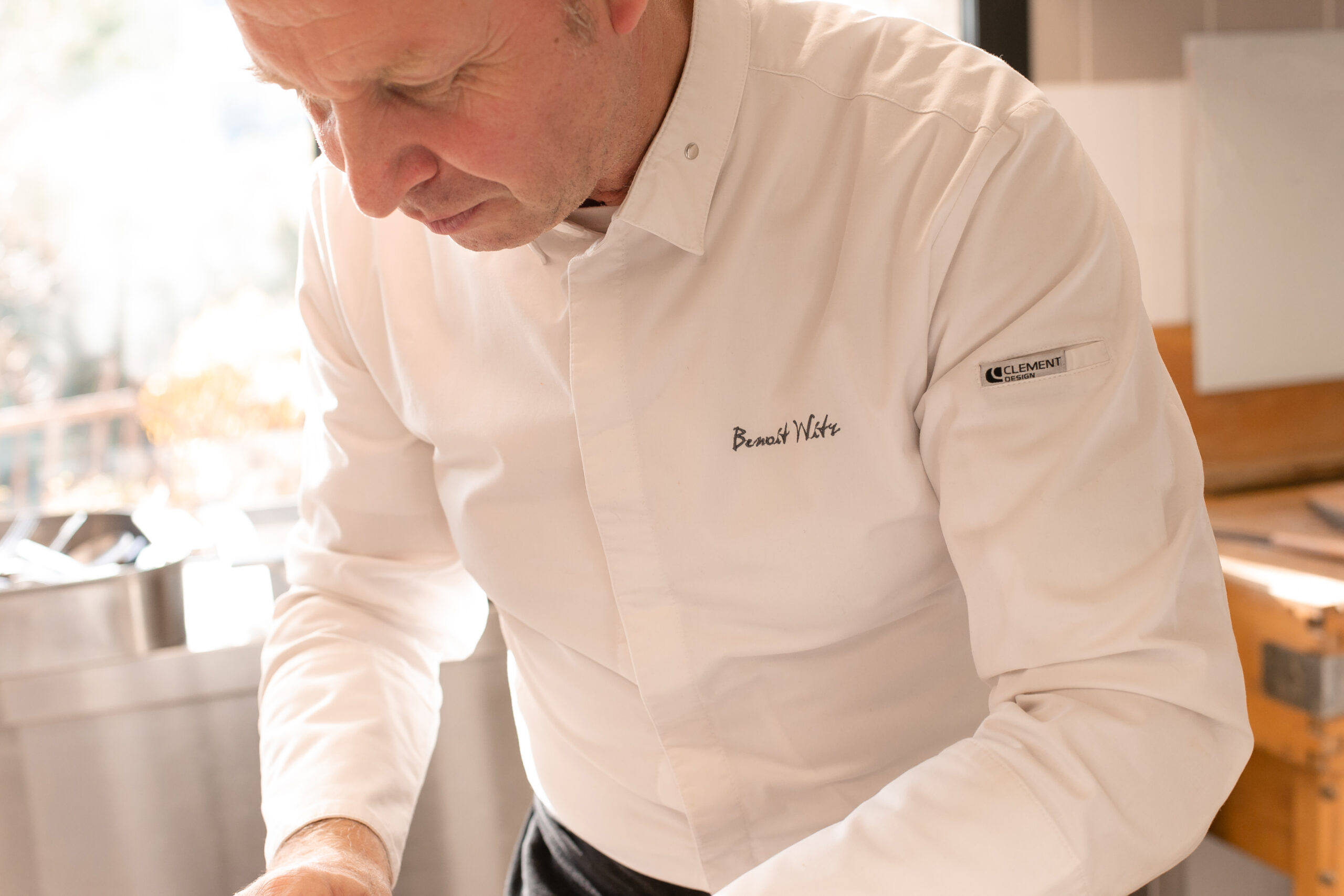
The food follows the same logic. Le Jardin Secret, the estate’s Michelin Green Star restaurant, has no fixed menu at all. Each morning, producers from within fifty kilometres deliver whatever is best that day, and chef Benoît Witz builds dinner around it. It is refined cooking, but it is served in an old cottage that nobody has bothered to dress up for effect, because the emphasis is on continuity rather than theatre. This is the sort of detail the new British traveller notices. British Airways’ research found that nearly a quarter of UK adults now want their time away to include time in nature, and at Lou Calen that connection extends to what is on the plate.
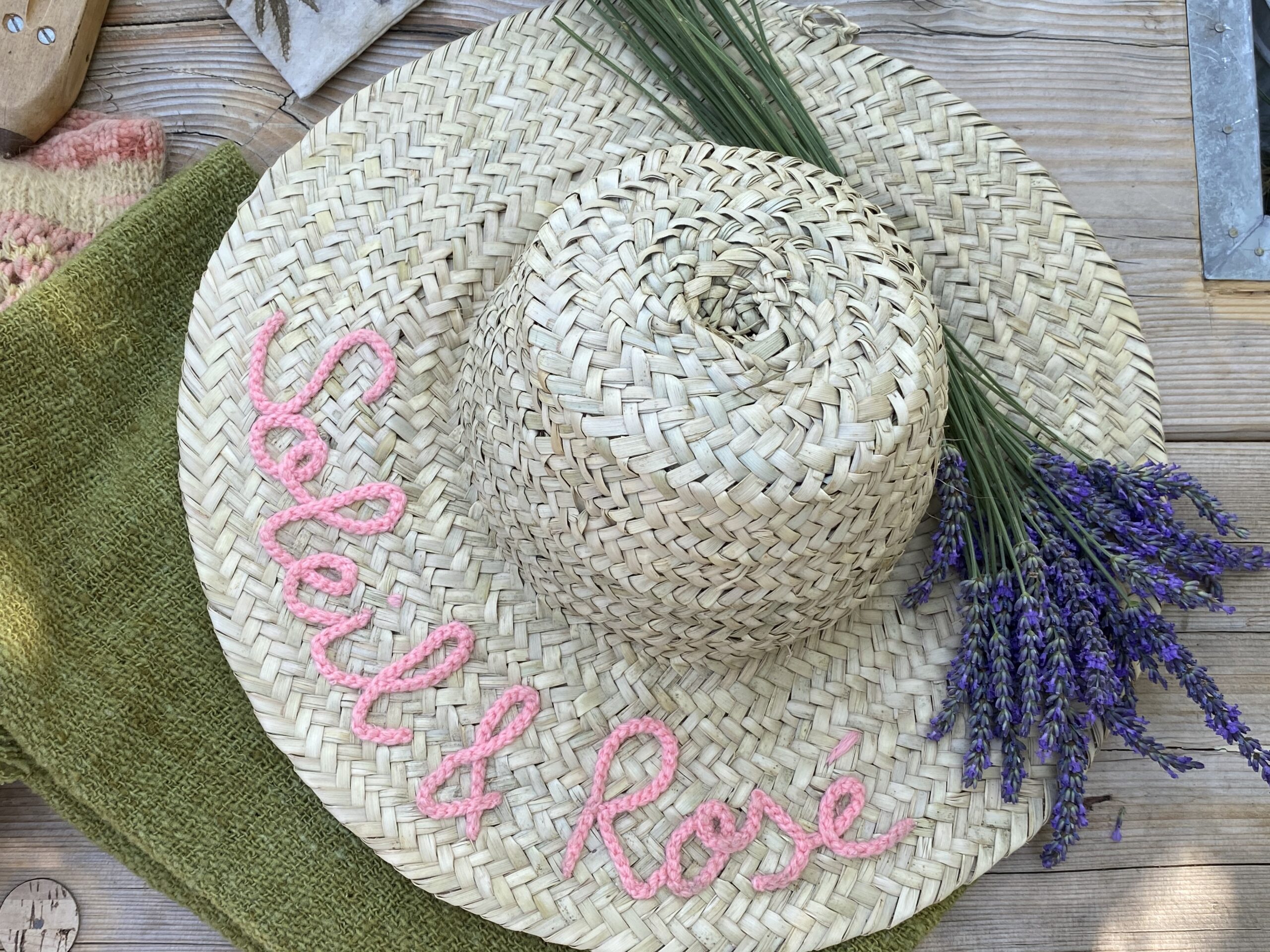
Then there are the workshops, which may be the clearest expression of what this new traveller is looking for. Basket weaving with local women who have practised the craft for decades, using wild grasses gathered nearby. Botanical walks led by people who know the land by memory rather than by manual. In winter, truffle hunting through the oak groves with families who have worked them for generations, dogs leading the way. None of it is entertainment invented for guests. These are things that would carry on whether visitors were present or not, which is exactly why they feel worth crossing the Channel for.
For years, the discerning traveller was shorthand for someone who knew their thread counts and their tasting menus. The data suggests Britain is quietly rewriting that definition. Discernment now looks like knowing what to leave out, and choosing a place by what it will not demand of you. Graham Porter, the Canadian entrepreneur who spent twenty million euros bringing Lou Calen back to life, puts it plainly. True luxury, he says, is space. Space to breathe, to slow down and to rediscover a simpler relationship with time and nature. For the British traveller of 2026, that is no longer a poetic flourish. It is the whole point of going.